
Women need easier, more straightforward paths to enjoying the quality of life they deserve
by Megan Moyer, corporate marketing manager, as appeared in Chain Drug Review
As fast as retail is evolving, so is the collective understanding of women’s health and its complexities. After decades of little information, misinformation, and a deep void of understanding and research, the tide is turning, and awareness, knowledge and destigmatization are increasing rapidly. The challenge ahead is to continue sharing information, empower women with facts and choices, and provide products, services, and support that will improve their quality of life.
A study conducted by Persuadable Research Corp. in February illustrates where manufacturers and retailers can step forward to be partners and allies in addressing the many needs of women who are entering unknown territory as they hit mid-life. This three-part article series will share key points from the research and include steps retailers and manufacturers can take to attract this segment and win their loyalty.
Persuadable Research surveyed 750 women ages 35 to 65 about their life stage to understand what their perimenopause and menopause experience was like, both in symptoms they were managing and how they were navigating health care resources. In addition to standard closed-ended questions, multiple open-ended questions used an artificial intelligence tool that allowed respondents to react to comments from other respondents.
The AI-enabled discussion format provided a deeper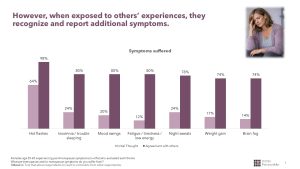 understanding than traditional survey questions alone. By allowing participants to reflect on the experiences of their peers, researchers uncovered symptoms that many women had not initially identified in their own lives.
As outlined in the responses, hot flashes were the most prevalent symptom experienced, followed by a three-way tie between insomnia, mood swings, and fatigue. Night sweats were close behind in third place and then weight gain and brain fog tied for fourth.
Persuadable Research president, Erika Herrin, stated, “There are two key takeaways. First, women appear to under-report their symptoms initially. Once they are exposed to what other women are experiencing, reported symptoms increase dramatically, suggesting that some may not recognize their symptoms as related to perimenopause or menopause or they may feel hesitant to admit what they are experiencing. Second, the vast majority of women are dealing with numerous difficult and disruptive symptoms and, as later survey findings show, many feel the treatments they have tried are ineffective.
The study indicated that 80% of women ages 45 to 49 were experiencing a mix of possible symptoms as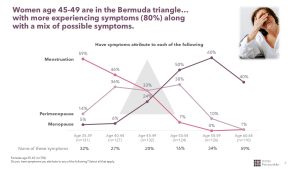 they are potentially dealing with menstruation, perimenopause, and then menopause all within those few years.
The study found that women blend both treatments and lifestyle changes to manage their symptoms, but many don’t find their management strategies effective. Top methods reported were:
- Using vitamins and supplements.
- Taking over-the-counter pain relievers.
- Eating healthy/balanced diet.
- Making lifestyle changes.
- Prioritizing sleep.
- Reducing stress.
- Limiting alcohol consumption.
- Trying natural products.
Additionally, when asked the biggest frustration when trying to treat symptoms, many women said ineffective treatments. In fact, 40% don’t feel well-informed about treatment options, and 47% were skeptical about new treatments.
Part of this frustration can be linked to the lack of education health care providers have received about perimenopause and menopause, which can be traced to the lack of research given to hormonal changes that every woman goes through. While 65% of the respondents have talked with a health care professional about their peri/menopause symptoms, only 37% were extremely or very satisfied with the conversation.
The lack of open communication and support from health care providers is another source of frustration (27%). While 54% trust their provider when it comes to peri/menopause, only 25% felt their provider prepared them for what to expect.
This lends to the lack of support women felt in navigating perimenopause and menopause. A low 32% of respondents felt supported in managing symptoms, and an unfortunate 42% hide symptoms to avoid negative judgment.
Although conversations about peri/menopause are becoming more common, women still want more honest conversations (83%), and a majority at 69% feel they need to advocate for themselves. Women 45 to 49 wished they had more education and counseling on what to expect before symptom onset (38%), as well as access to proven treatment options (29%).
These findings point to a larger gap: Women are not only managing complex symptoms but also trying to make sense of them without consistent guidance, trusted resources, or easily available, effective support. Whether they aren’t seeking help because they don’t know where to turn, aren’t connecting their symptoms to the likely cause, or aren’t finding providers or products that help, women need easier, more straightforward paths to solutions so they can enjoy the quality of life they deserve.
There’s a clear opening for retailers and manufacturers to fill these unmet needs. By becoming a trusted source for education, validation, and accessible solutions, retailers and manufacturers can help women navigate these years of evolution with greater confidence while building loyalty among a consumer segment with significant influence and spending power.